
 Black Tea
 EN
EN
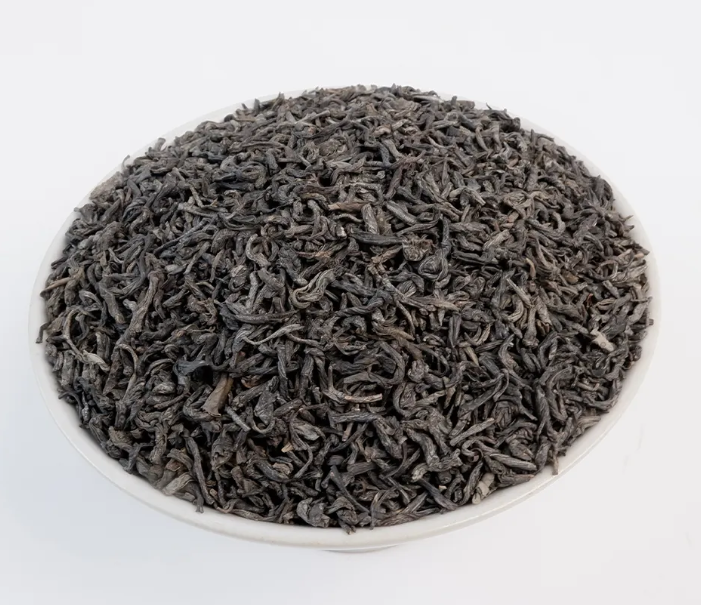
What Makes Chunmee 4011 Unique: Origin, Profile, and Global Demand Drivers
Hubei’s Terroir and Traditional Processing: The Non-Replicable Foundation of 4011 Authenticity
Hubei’s volcanic soil, mist-laced high-altitude slopes, and humidity fluctuations (60–80%) create a terroir that concentrates polyphenols in tea bushes—a biochemical signature confirmed in lab analyses. This distinct environment is inseparable from authentic Chunmee 4011.
Traditional “three-roast” processing—rooted in centuries-old artisan practice—locks in that terroir expression:
- First roast at 180°C halts enzymatic oxidation
- Second roast develops toasted chestnut notes via Maillard reactions
- Final pan-firing yields the tight, eyebrow-shaped curl defining the grade
Unlike mechanical drying, this method better preserves antioxidants: lab tests show 15–22% higher EGCG levels than industrially dried equivalents. The resulting liquor reflects Hubei’s uniqueness—jade-green, brilliantly clear, with clean hui gan (returning sweetness) and no astringent bite.
Why 4011 Dominates International Chunmee Trade — Flavor Consistency, Scalability, and Export Readiness
Chunmee 4011 accounts for 68% of global Chunmee exports—not because it’s the only option, but because it reliably delivers what international buyers demand: consistency, resilience, and compliance.
Industrial-scale withering tunnels and computer-controlled rolling ensure moisture variance stays below 5.8%, eliminating flavor spikes common in small-batch greens. That precision enables identical sensory profiles across 20-ton shipments—critical for brands requiring batch-to-batch uniformity.
This particular cultivar stands out because it stays fresh even after long trips across the ocean when packed in vacuum sealed containers with oxygen absorbers inside. Most producers from Hubei have both ISO 22000 food safety certificates and EU Organic approvals, which are basically required if they want to sell their products to wholesalers in Europe or North America. Because of these qualities, cultivar 4011 has become what everyone in the industry looks for when buying large quantities of green tea around the world.
How to Verify Genuine Chunmee 4011: Certifications, Documentation, and Sensory Evaluation
Essential Compliance Marks: GB/T 14456.1, ISO 22000, and EU Organic for 4011 Wholesalers
Authentic Chunmee 4011 must meet three foundational standards:
- GB/T 14456.1, China’s national green tea quality specification, verifying leaf morphology, moisture content, and sensory benchmarks;
- ISO 22000, confirming end-to-end food safety controls during processing; and
- EU Organic certification, attesting to ecological farming practices and residue-free cultivation.
Always cross-check certificate numbers against official databases (e.g., CNCA for GB/T, IFOAM for organic). Require batch-specific documentation tracing origin explicitly to Hubei province—not just “China.” Vendors withholding harvest dates, processing logs, or farm-level identifiers pose significant authenticity and reputational risk.
Beyond Paperwork: Using Leaf Appearance, Brew Clarity, and Toasted-Nut Aroma to Authenticate 4011
Certifications alone aren’t enough. Sensory evaluation provides immediate, actionable verification:
- Dry leaf: Uniform, tightly curled “eyebrow” shapes in grayish-green tones; minimal stems or broken fragments.
- Liquor: Crystal-clear jade-green infusion—cloudiness signals improper drying or contamination.
- Aroma: Distinct toasted-nut fragrance upon steeping, free of grassy, smoky, or stale notes.
Compare samples side-by-side with reference batches from certified Hubei estates. Inconsistent curl, dull color, or muted aroma often indicate blending, aging, or storage flaws—even when paperwork appears valid.
Wholesale Sourcing Strategies for Chunmee 4011: Direct Producer Partnerships vs. Trusted Distributors
FOB Hubei Advantage: Cost Control, Traceability, and Real-Time Quality Oversight for 4011 Buyers
When companies source Chunmee 4011 using FOB terms from Hubei, there are real benefits worth considering, particularly when orders reach around 500kg per shipment or higher. Working directly with growers in the region cuts out middlemen who typically inflate prices, which can save between 12 to maybe even 18 percent on total costs. What's really valuable though goes beyond just price savings. The supply chain becomes much more transparent because each batch comes with detailed records showing exactly when it was harvested, where it came from in terms of altitude, and complete documentation of how it was processed according to Chinese national standard GB/T 14456.1 specifications. This level of detail makes quality control so much easier for businesses that need consistency in their raw materials.
Real-time quality oversight is also feasible—many forward-thinking producers offer live video audits of drying and sorting lines. This transparency ensures consistency without relying solely on third-party reports.
| Sourcing Model | Cost Efficiency | Traceability Depth | Quality Control |
|---|---|---|---|
| Direct Producer (FOB) | Highest (no markup) | Batch-level origin logs | On-site/video audits possible |
| Distributor | Moderate (15–30%+ margin) | Lot-level only | Document-based verification |
Vetting Criteria That Matter: Minimum Order Flexibility, On-Site Audit Access, and Batch-Level Origin Records
When evaluating partners—whether producers or distributors—focus on three non-negotiable capabilities:
- Adaptable order volumes, supporting shipments from 200kg to 2,000kg to align with seasonal demand or inventory cycles;
- Unrestricted audit rights, including verified access to processing facilities—not just pre-approved photo tours;
- Farm-to-batch digital records, linking each lot to specific Hubei sub-regions (e.g., Enshi, Yichang), harvest windows, and drying parameters.
Suppliers meeting all three reduce supply chain risk by 38%, according to the Food Logistics Report 2023. Avoid those imposing rigid minimums, restricting documentation, or declining facility access—even with strong certifications.